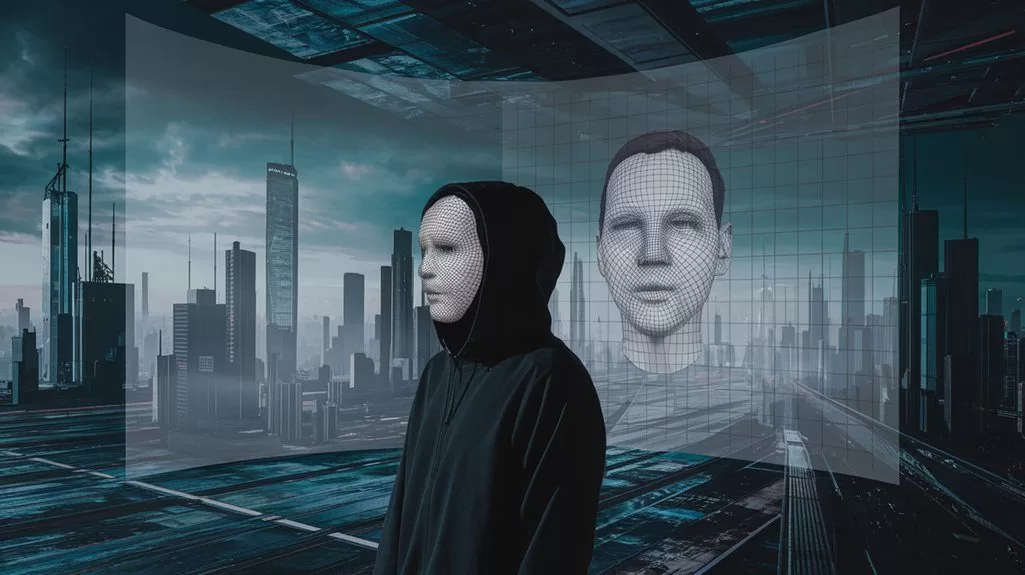


Chameleon AI is a ninja for your face, shielding identities from pesky facial recognition. Developed by Georgia Tech, it expertly cloaks faces using advanced masking. The clever beauty? It doesn't sacrifice image quality. Works on weak devices too. While empowering privacy-hungry users, it raises eyebrows on evasion of legit surveillance. Ethical twist, anyone? Worries aside, it's a hero for privacy-conscious. Navigate the maze of data privacy and see where it leads.
Key Takeaways
- Chameleon AI uses Personalized Privacy Protection masks to cloak faces, making them unrecognizable to facial recognition systems.
- Cross-image optimization allows one mask to effectively protect multiple photos from unauthorized facial scanning.
- The technology maintains high image quality while rendering faces invisible to recognition systems.
- Chameleon AI is optimized for devices with limited processing power, ensuring broad accessibility.
- Focal diversity-optimized ensemble learning helps counter adversarial techniques used by facial recognition systems.

While the world debates privacy invasion, Chameleon AI swoops in like a digital superhero. Developed by the bright minds at Georgia Tech University, this innovative technology promises to shield users from unauthorized facial scanning. But does it really deliver on its promise of Chameleon effectiveness? The answer is a resounding "yes." By employing advanced masking techniques, Chameleon AI manages to cloak faces from prying eyes without sacrificing image quality. The technological advancements are undeniable, allowing this tool to operate on devices with limited processing power. Now, that's efficiency.
Privacy concerns are at the forefront of digital discussions, and rightly so. With Chameleon AI, users gain enhanced privacy—rendering their faces invisible to facial recognition systems. It's like having an invisibility cloak for your face. But is it ethical? Well, the ethical implications are a mixed bag. On one hand, it empowers users to control their biometric data, a win for personal freedom. On the other, it could potentially be misused by those wanting to evade legitimate surveillance. The balance between privacy and security is a tightrope walk, indeed. As facial recognition systems continue to raise privacy concerns, tools like Chameleon AI become increasingly relevant in navigating these ethical challenges.
Privacy: a double-edged sword—Chameleon AI empowers users but challenges the ethics of surveillance evasion.
The Personalized Privacy Protection (P3) Mask is Chameleon's secret weapon. Based on a few user-submitted facial images, it creates a mask that confounds facial recognition systems while keeping the image crystal clear to humans. Cross-image optimization means one mask fits all—photos, that is. This boosts efficiency, making it a formidable adversary to facial recognition technology. Chameleon AI is especially notable for its resource-optimized performance, enabling it to function effectively even on devices with limited processing capabilities.
And with its focal diversity-optimized ensemble learning, it stays ahead of evolving adversarial techniques. Pretty clever, right? Yet, it raises eyebrows about what's next.
Chameleon AI is versatile. It finds applications in journalism, social media, and even e-commerce, preserving user identities and maintaining trust. It's a refreshing change for those wary of unauthorized data scraping and identity fraud.
But for every benefit, there's a potential downside. Misuse could lead to ethical dilemmas, especially in areas like law enforcement and security.
Despite these concerns, Chameleon AI stands as a beacon of hope in a world obsessed with surveillance. It tackles challenges like unauthorized data scraping and surveillance concerns head-on. With plans to release its code on GitHub, it invites further development, pushing the boundaries of privacy technology. Chameleon AI's open-source plans emphasize the importance of responsible and ethical data handling, encouraging developers to incorporate its privacy-protection features into new applications.
As a tool, it's not perfect—it's a work in progress. But for now, it's a promising step towards securing personal privacy in a digital age riddled with ethical quandaries. And perhaps, that's what makes it so intriguing.
References
- https://thedailyguardian.com/others/chameleon-ai-a-revolutionary-tool-for-protecting-users-from-facial-recognition-scanning/
- https://observervoice.com/chameleon-ai-a-new-shield-against-facial-recognition-80130/
- https://www.bioenabletech.com/news/chameleon-ai-safeguarding-facial-privacy-while-maintaining-image-quality
- https://www.thedigitalspeaker.com/chameleon-ai-cloak-outwits-facial-recognition/
- https://idtechwire.com/georgia-tech-unveils-chameleon-ai-system-to-block-unauthorized-facial-recognition/