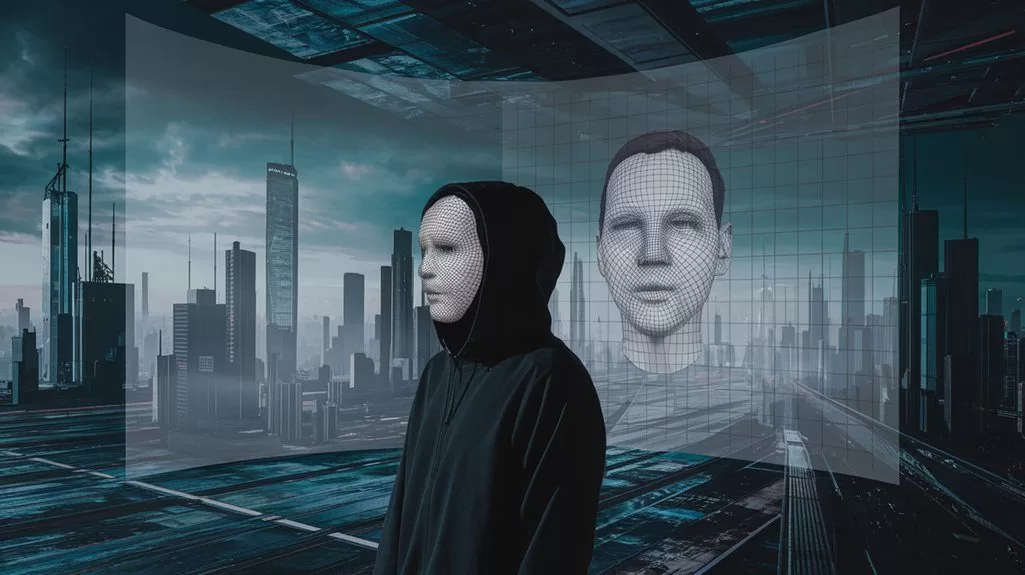

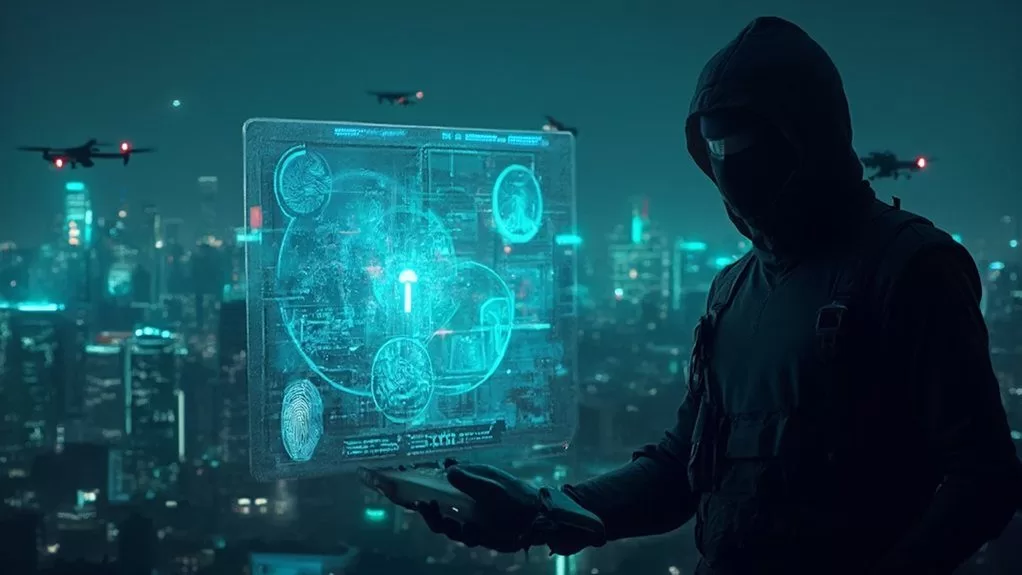
AI-powered facial recognition holds promise, simultaneously serving as both a marvel and a menace. Advances in accuracy—nearing perfection at 99.5%—are thrilling, yet bias and privacy snags can't be brushed under the rug. Law enforcement loves it; civil rights groups twitch. It's like a supervillain with a heart of gold: helping find missing persons while peeking into private lives. Prepare for more. There's way more to this techy tale.
Key Takeaways
- AI-powered facial recognition offers high accuracy, reaching 99.5% on standard datasets, enhancing security measures.
- Ethical concerns include biases affecting accuracy for people of color and women, and risks of privacy invasion.
- Facial recognition aids in law enforcement, airports, financial security, retail, and public safety.
- Anti-spoofing advancements and cross-platform compatibility improve system reliability and versatility.
- Balancing the benefits of security and privacy risks remains a challenge, with ongoing discussions needed.

Although it may sound like something straight out of a sci-fi movie, AI-powered facial recognition is very much a reality today. It's here, and it's changing the game. Using AI algorithms, this technology identifies individuals by analyzing facial features. Its evolution, thanks to advancements in AI, especially deep learning, has made it faster and shockingly accurate, with accuracy rates often hitting 99.5% on standard datasets. But let's not get ahead of ourselves—there's a catch, and it's called ethical implications.
AI-powered facial recognition is a reality today, with impressive accuracy but concerning ethical implications.
On the one hand, the technological advancements are impressive. Convolutional Neural Networks (CNNs) and deep neural networks are doing some heavy lifting here, processing facial data with remarkable precision. They measure distances between facial landmarks, analyze complex patterns, and have anti-spoofing measures that make fooling these systems a tough gig. They're even cross-platform compatible, meaning they can operate across various devices. No escaping them. That's the good news. Public acceptance of facial recognition technology is divided, with approximately 46% of adults finding its use beneficial for society, particularly in finding missing persons and solving crimes.
But then, there's the not-so-good news. Bias issues are real. These systems struggle with accuracy for people of color and women. It's like they've got a selective sight problem or something. And if that wasn't enough, the risk of data breaches looms large. After all, we're talking about sensitive biometric data. Once breached, it's not like you can change your face as easily as a password. The lack of thorough regulations doesn't help either, especially when these tools find their way into law enforcement. Big Brother, anyone? Facial recognition technology relies on convolutional neural networks and machine learning to function, which can contribute to algorithmic biases when training data is not diverse.
Public worries are mounting. People are understandably concerned about their privacy. Who wants to be watched all the time? The ethical considerations aren't just academic debates; they're real problems that need real solutions. Balancing security benefits against privacy risks is like walking a tightrope. For now, it's a wobbly walk.
Facial recognition is also making waves in the real world. In law enforcement, it's used for surveillance and investigations. Airports are deploying it to streamline immigration processes. The financial sector is embracing it to secure transactions, replacing the old-school passwords. Retailers love it for tailoring customer experiences. Meanwhile, cities are using it for public safety and crowd monitoring. It's a love-hate relationship. Moreover, healthcare organizations face increased cybersecurity threats, as ransomware attacks have doubled since COVID-19, making the protection of facial recognition data even more crucial.
Sure, it's revolutionizing security, but it's also a risk. It might automate roles, impacting jobs in security sectors. There's potential for widespread integration into consumer electronics. But where does that leave us? With more questions than answers. In the end, AI-powered facial recognition is a double-edged sword. It's a revolution, no doubt. But with risks that can't be ignored.
References
- https://www.innovatrics.com/facial-recognition-technology/
- https://www.asisonline.org/security-management-magazine/monthly-issues/security-technology/archive/2021/december/facial-recognition-technology-the-good-the-bad-and-the-future/
- https://www.tridon.com/ai-facial-recognition-technology-the-future-of-security/
- https://riskgroupllc.com/artificial-intelligence-powered-facial-recognition-technology/
- https://recfaces.com/articles/ai-facial-recognition