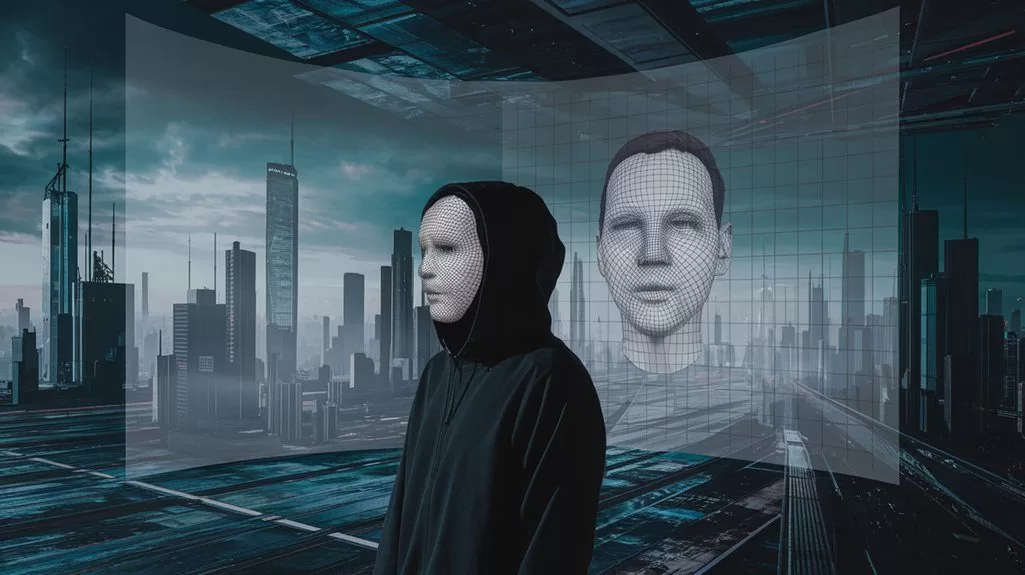


Colorado's controversial use of facial recognition technology in schools has sparked a lively debate. Supporters argue it enhances security, while critics cite privacy and ethical concerns. Does this tech really protect, or just creepily watch? There's also chatter about surveillance leading to more police involvement and a potential pipeline to prison. Some call it safety; others, an invasion. This discussion hits the nerves of privacy advocates. Intrigued about the clash of security and liberty? Prepare yourself.
Key Takeaways
- Facial recognition tech in schools is debated for balancing safety with privacy concerns in Colorado.
- Critics argue that surveillance could infringe on students' privacy and civil liberties.
- Proponents believe facial recognition can enhance security and deter potential threats.
- There are concerns about data security and potential misuse of biometric information.
- The effectiveness of facial recognition in preventing school violence remains unclear.

How far should schools go in monitoring their students? That's the billion-dollar question. In Colorado, the adoption of facial recognition technology in schools has sparked a heated debate surrounding student privacy and surveillance ethics. On one hand, supporters argue that it's a necessary security measure. On the other, critics highlight the chilling implications for privacy and civil liberties.
Imagine a school where every move is tracked under the guise of safety. Sounds like a dystopian novel, doesn't it? Yet, this is the reality some Colorado schools are embracing, while others, like those in New York, have banned such technology altogether due to privacy concerns.
A dystopian reality: Colorado schools track every move, while New York halts the tech over privacy fears.
The use of facial recognition in schools raises serious ethical questions. The collection of biometric data, like facial images, presents significant risks. Who oversees this data? Is it secure? There's a regulatory gap here—one that could swallow student privacy whole. Without strict regulation, the potential for misuse looms large. Compliance with regulations like GDPR and CCPA is crucial to protect personal data and mitigate these risks.
Surveillance ethics demand rigorous debate and regulation, yet inconsistencies across state laws make this a complicated affair. While New York has initiated a ban, Colorado schools push forward, despite the controversy over civil rights implications. The impact of surveillance on students is concerning, with reports indicating that it contributes to increased interactions with law enforcement, potentially leading to a school-to-prison pipeline.
Proponents of facial recognition argue it enhances security, deterring potential threats and monitoring banned individuals. But does it really? The effectiveness of such technology in preventing school violence is still up for debate. Some argue it offers nothing more than an illusion of safety.
After all, technology is often swiftly adopted following high-profile incidents, like school shootings, without a thorough evaluation of its true impact. Critics warn of mission creep—surveillance tools being used for control or discipline rather than protection. Several Colorado schools employ facial recognition software for security, yet there is a lack of definitive research on its effectiveness in improving school safety.
Consider the academic and social impacts. Continuous surveillance might stress students, potentially creating a climate of anxiety. It's hard to focus on algebra when Big Brother is watching, right? This normalization of surveillance could erode trust between students, parents, and educational institutions. Trust is fragile, easily shattered by the ever-watchful eye of technology.
As the debate rages on, the need for robust data protection policies becomes ever more critical. Schools must safeguard student information with rigor. Yet, in this largely unregulated space, can they? The ethical implications are vast. This isn't just about security; it's about rights and freedoms.
Colorado's embrace of facial recognition in schools is a controversial step in the ongoing battle over privacy and ethics. The stakes are high, and the future, uncertain. But one thing is clear: the conversation is far from over.
References
- https://www.edsurge.com/news/2024-12-05-does-facial-recognition-belong-in-schools-it-depends-who-you-ask
- https://www.kunc.org/podcast/inthenoco/2024-10-29/some-colorado-schools-use-facial-recognition-software-to-make-students-safer-is-it-also-a-civil-rights-violation
- https://www.insidehighered.com/news/tech-innovation/teaching-learning/2024/02/27/facial-recognition-heads-class-will-students
- https://www.eff.org/wp/school-issued-devices-and-student-privacy
- https://www.edweek.org/leadership/does-facial-recognition-technology-make-schools-safer-what-educators-need-to-know/2023/10