

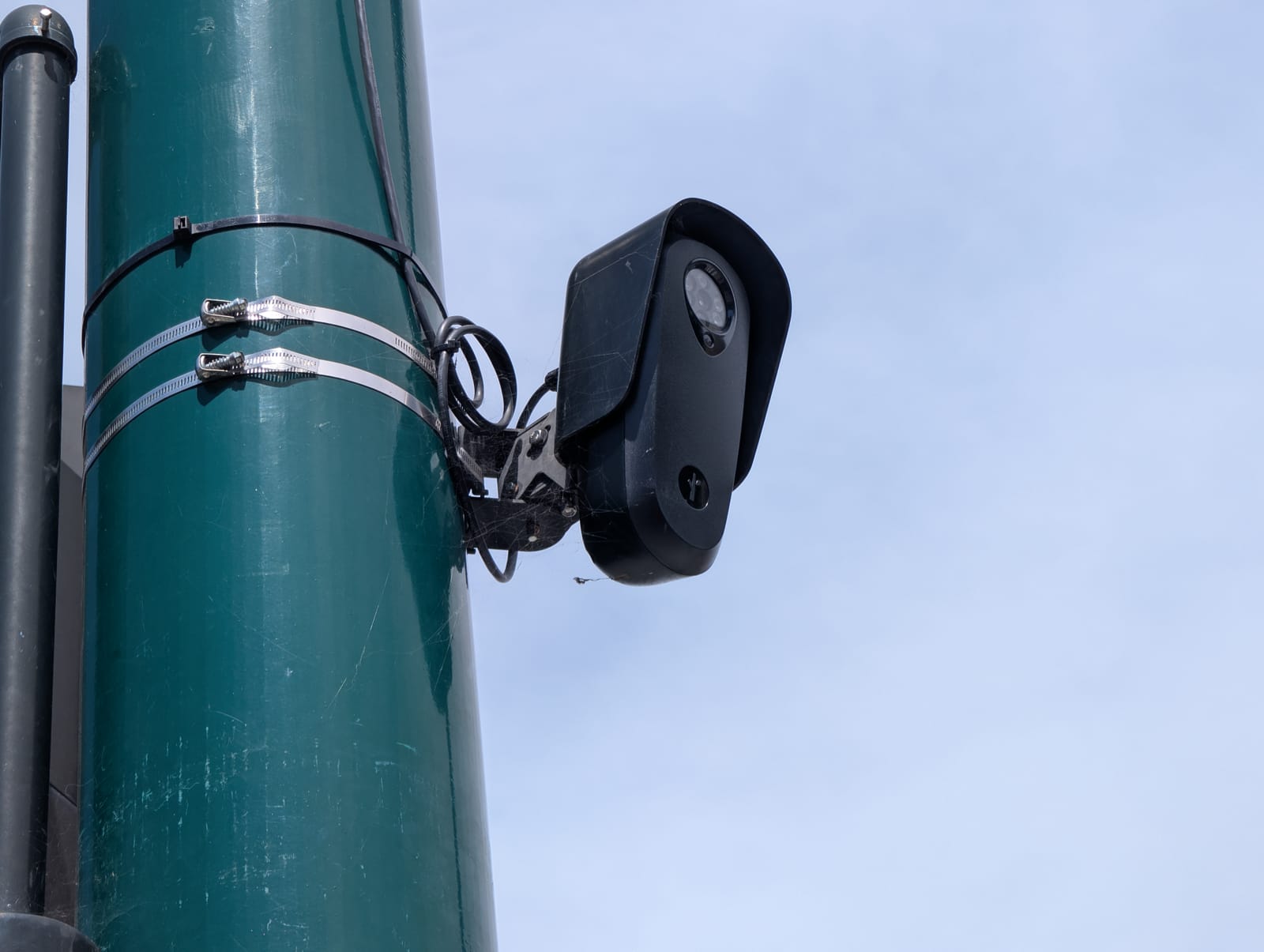
On November 3, League City, Texas voted on its police department's 55 Flock cameras. Just under 54% of the 46,400 ballots cast on the question favored removing them, The Texas Tribune reported. Two days later, city crews covered more than 50 of the cameras with nylon trash bags, according to Houston Public Media.
League City has company. TechCrunch counted at least 10 local governments and police departments that have moved since summer to "curb, restrict, or end" their use of Flock.
A vote does not take a camera off its pole, though, and it does not delete anything. This fall, cameras stayed up for weeks after contracts ended, and in one town, bagged cameras kept photographing plates. And Flock's current terms promise to delete a town's data at the end of a contract only if the town asks.
Facts are current as of November 7, 2026.
What happened after the votes
The clearest case is Excelsior Springs, Missouri. Its council voted unanimously on October 19 to end the contract, and the city bagged its 15 cameras. Then police Lt. Ryan Dowdy logged in to answer a Missouri Sunshine Law request. "I logged in yesterday to fulfill that request and was surprised to find we were still capturing data as recently as yesterday," he told KCTV. Most photos were obscured or showed only headlights and taillights through the bags, but a few showed plates and vehicles. Crews are adding a second bag to each camera. Dowdy said the department has not used any images taken after the vote.
Other towns had a different problem: the camera came back. Plymouth, Minnesota voted on September 22 to end its contract, and its police chief later had the cameras unplugged. On November 4, a Flock contractor replaced one of them, saying it was "broken," The Drive reported. A Flock spokesperson told The Drive that unplugging the cameras "automatically triggered maintenance orders" and that "one was inadvertently missed." The company said, "The newly installed camera is not collecting data."
It has happened before. Cambridge, Massachusetts said in a December 2025 statement that Flock technicians installed two cameras "without the City's awareness" after "an outstanding work order that should have been canceled." Dayton, Minnesota said a camera was "placed back into service without authorization," per The Drive.
Elsewhere, the cameras are off, and in most places they are still up:
| Town | Where things stand | Source |
|---|---|---|
| Alexandria, Virginia | Police say all 61 cameras stopped reading and are "no longer recording, capturing, or collecting data." Two residents say they filmed two of them flashing infrared light at passing cars. The cameras are not covered, because police say covering them "could constitute tampering." Flock is to remove them by the end of December. | Alexandria Brief |
| Fort Myers Beach, Florida | The council voted in September to end the contract. The 5 cameras are "still up though not actively working," and the town has no removal date. | Fort Myers Beach Observer |
| Two Rivers, Wisconsin | Cameras were deactivated in September. The council voted unanimously on November 2 to end the contract and ordered the cameras kept covered until removal, which is expected in spring. | NBC26, Herald Times Reporter |
| Henrico County, Virginia | The county asked Flock to remove 128 cameras by October 21, then took them down itself. A county spokesperson later said that date was a request, not a deadline in the contract. | Henrico Citizen |
| League City, Texas | Cameras bagged on November 5. The mayor said about one year is left on the contract, and the cameras come down once contract issues with Flock are sorted out. | Houston Public Media |
In most of these towns, the city or Flock says the cameras are off. Checking is hard: in Alexandria, police said Flock's website lists the cameras as decommissioned, but the department's public transparency portal does not show the status of each camera.
What the contract says happens next
Flock owns the cameras and leases them to the town. Its current terms and conditions, last updated August 21, 2026, say that when a contract ends, "Flock will remove any applicable Flock Hardware within a commercially reasonable time period." There is no number of days. Dayton's city administrator said Flock told the city removal would take 60 days, The Drive reported. The same terms say the customer is not permitted to "remove, reposition, re-install, tamper with, alter, adjust" the hardware.
On recording, Flock's media FAQ says that when an agreement ends, "platform access is disabled, cameras are remotely deactivated, and Flock works with the agency to schedule physical removal." It adds that Flock can deactivate cameras remotely "at any time" if an agency asks.
The data is a separate step. Day to day, footage is deleted on a rolling schedule set in each town's order form. Flock says the default is 7 days, but TechCrunch reported that Flock cut the default from 30 days to seven in August for new customers. The end-of-contract clause is broader. Section 5 of the terms says: "Upon termination of this Agreement, at Customer's request, all Confidential Information will be deleted within 90 days." The terms count the town's data as Confidential Information. Two limits apply:
- Flock does not have to delete data it must keep under "an applicable legal obligation or policy," such as "inter-agency audit log integrity or metadata held for evidentiary authentication."
- Section 4.1 gives Flock a "perpetual" license to use customer data "to support and improve Flock's products and services," and Section 7.3 says that section survives the end of the contract. Writing about an earlier version of the terms with the same license, the ACLU's Jay Stanley said it lets Flock keep using driver data after a customer leaves. The same section says "Flock shall not sell Customer Data." We found no court ruling on how the license and the deletion promise fit together.
Not every town signed these terms. Flock's August 2026 post on the update says the online terms "do not impact customers who have executed a static Master Services Agreement or other standalone agreement with Flock." One older agreement, on a Collin County, Texas agenda in November 2025, says the agency's data is returned or destroyed "in any case upon termination," with no deadline in days. Your town's own signed agreement is the one that counts.
We looked for a public record of Flock confirming in writing that a former customer's data was deleted, and did not find one. Eugene, Oregon's termination notice asked Flock to delete all customer data by December 17, 2025, according to Lookout Eugene-Springfield. We found no public report on whether Flock confirmed it.
What to ask your town for, in writing
All of this is legal. One email to the city clerk or the police records office can cover it. Our Flock camera guide explains how to file a public records request in its "What you can do" section.
- The signed agreement and the order form. They show which terms your town signed and how long footage is kept day to day.
- The termination notice and Flock's reply. They show the date the contract ended, which is when the removal and deletion promises start to apply.
- The deletion request. Ask whether the town sent one, on what date, and whether Flock confirmed in writing that the data is gone. If no request went out, ask your council to send one. Eugene's notice is a model: it asked Flock to delete "any and all copies of customer data, customer generated data and anonymized data."
- The search audit log, before access closes. It records the searches that agencies ran in the Flock system, Gray News reported. Flock disables platform access when a contract ends, and its terms only promise data through its own web interface. Ask early, and ask the town to keep the records while your request is reviewed. In Washington, a requester quoted by the EFF said two cities let the records delete automatically while their lawyers reviewed the request.
- Written confirmation that each camera is off. Ask again after any maintenance visit, since Plymouth, Cambridge and Dayton all saw cameras return. Midland, Texas staff will "confirm in writing that every city user account has been deactivated and that all equipment has been removed," the Midland Reporter-Telegram reported.
Do not cover, unplug or take down a camera yourself. It belongs to Flock, and the contract bars even the city from removing or tampering with it. If a camera looks active, send the city its location and the time you saw it.
A records request is how the one confirmed case of bagged cameras still taking photos came to light. Excelsior Springs found that its bagged cameras were still taking photos because someone asked to see the records.
Frequently asked questions
Do Flock cameras stop recording when a town cancels?
Flock says they do. Its media FAQ says cameras are "remotely deactivated" when an agreement ends, and in a statement quoted by WTVR, it said that in Henrico, "all ALPR cameras stopped capturing new license plate data" when the contract ended. In Excelsior Springs, cameras the city had bagged still captured some plates while the contract was still in force.
How long does Flock take to remove its cameras?
The current terms say "a commercially reasonable time period," with no number of days. Dayton, Minnesota was told 60 days. Alexandria, Virginia expects removal by the end of December 2026, and Two Rivers, Wisconsin by spring.
Does Flock delete a town's data when the contract ends?
Under the current online terms, Flock deletes it within 90 days if the town asks, except for data it must keep, such as audit logs. Towns that signed a standalone agreement may have different terms, so the signed agreement is the one to read.
Who owns the data from a Flock camera?
The terms say the customer, meaning the town or agency, owns it. Flock also holds a perpetual license to use it to support and improve its products, and says it does not sell it.
Can I cover or take down a Flock camera myself?
No. The cameras are Flock's property, and the contract bars even the city from tampering with them. Report a camera that looks active to the city instead.