
On October 29, General Motors agreed to pay $220 million to 35 states and the District of Columbia to settle allegations that it sold drivers' data. From 2016 to 2024, GM enrolled millions of drivers in a program called Smart Driver, which tracked "how many times they braked or accelerated quickly, and whether they went faster than the speed limit," according to the New York attorney general's office. The states' investigation found that GM sold that data to brokers under contracts that said it was for insurance products.
None of the $220 million goes to drivers. "Consumer restitution is not provided for by the settlement," Michigan's attorney general said, though a nationwide class action seeking money is still pending.
What drivers can get is the file itself. LexisNexis and Verisk, the two brokers that bought GM's driving data, each give you a free copy of your file once a year, and the settlement adds a way to ask GM directly.
Facts are current as of November 7, 2026.
What GM did, and what the settlement requires
The brokers were Verisk and LexisNexis Risk Solutions. California's attorney general said in May that GM reportedly made about $20 million nationwide from those sales. New York's office also said the OnStar app "mistakenly told over 370,000 drivers that they were not enrolled in Smart Driver" when GM was collecting and selling their data, and that in many cases "dealership employees allegedly accepted terms and conditions on behalf of customers without their consent."
GM did not admit wrongdoing. The Washington consent decree, one of the similar judgments GM is entering with each state and the District of Columbia, says GM does "not admit to any violation or liability." It takes effect November 30, 2026, and requires GM to:
- get a driver's "Affirmative Express Consent" before collecting, using or sharing their driving data
- ask the companies it shared driving data with before January 16, 2025 to delete it
- give drivers an easy way to request a copy of their driving data and a list of the kinds of companies it went to, answered within 45 days
The money goes to the states and the District of Columbia, including $12,054,341 for New York, per the New York attorney general's office, and $12,311,819 for Washington, per the judgment.
GM's statement, given to the Michigan Advance: "This agreement addresses Smart Driver, a product we ended in 2024, and reinforces steps we've taken to strengthen our privacy practices." In April 2024, GM said it had ended its relationships with LexisNexis and Verisk and that "any data sharing with these companies ended on March 20, 2024." A separate Federal Trade Commission order, final since January 14, 2026, bars GM from giving location and driving behavior data to consumer reporting agencies for five years.
How to get your driving file for free
LexisNexis and Verisk sold driving reports to insurers as consumer reporting companies, the same legal category as the credit bureaus. Federal law entitles you to one free file disclosure every 12 months from nationwide specialty consumer reporting companies, per the CFPB's summary of your rights. The Consumer Financial Protection Bureau's list says some of these companies "may also share your driving behavior data with auto insurers."
LexisNexis
The CFPB says LexisNexis "collects and reports driving behavior ("Telematics OnDemand") data for auto insurance pricing" and gives one free report every 12 months on request.
- Ask online at the LexisNexis request page, or call 1-866-897-8126.
- You give your name, address and date of birth. LexisNexis also requires either your Social Security number or your driver's license number and state before it will send a copy of your report.
- Allow about two weeks. LexisNexis then mails a letter with a PIN and a web address for viewing the report, and you can ask for a paper copy instead.
Verisk
Verisk says it "no longer receives driving behavior data from automakers" and no longer sells driving reports to insurers. It lists the dates its data stopped: GM on March 18, 2024, and Honda and Hyundai on April 9, 2024. If you own or lease one of those, you can still ask for one free report a year with its Driving Behavior Data Disclosure Form. It asks for your car's VIN, and the name on the request has to match the vehicle's owner or co-owner. Send it to FCRA-NPC@verisk.com, fax it to 800-955-2422, or mail it to the address on the form. Verisk also takes calls for free FACTA reports at 1-800-627-3487 and sends those reports by mail only.
Arity, if you used a driving app
Arity, an Allstate company, also collects driving data, through phones and in-car devices, per the CFPB. It gives a free report and driving score every 12 months if it has a file on you. Call 800-654-1412.
GM itself
GM's privacy statement, last updated June 17, 2026, lets any covered consumer ask to see, correct or delete their personal information. Use the privacy request form or call 1-866-697-7482. GM does not take these requests by email and says it may need up to 45 days. An access request also tells you which vehicles GM ties to you and the categories of data it collected from them, which may include driving behavior, location and vehicle information, and you can then ask for the vehicle data itself.
Do not go by what the OnStar app says. That is the app that told more than 370,000 enrolled drivers they were not enrolled.
Stop the sharing, and check your insurance
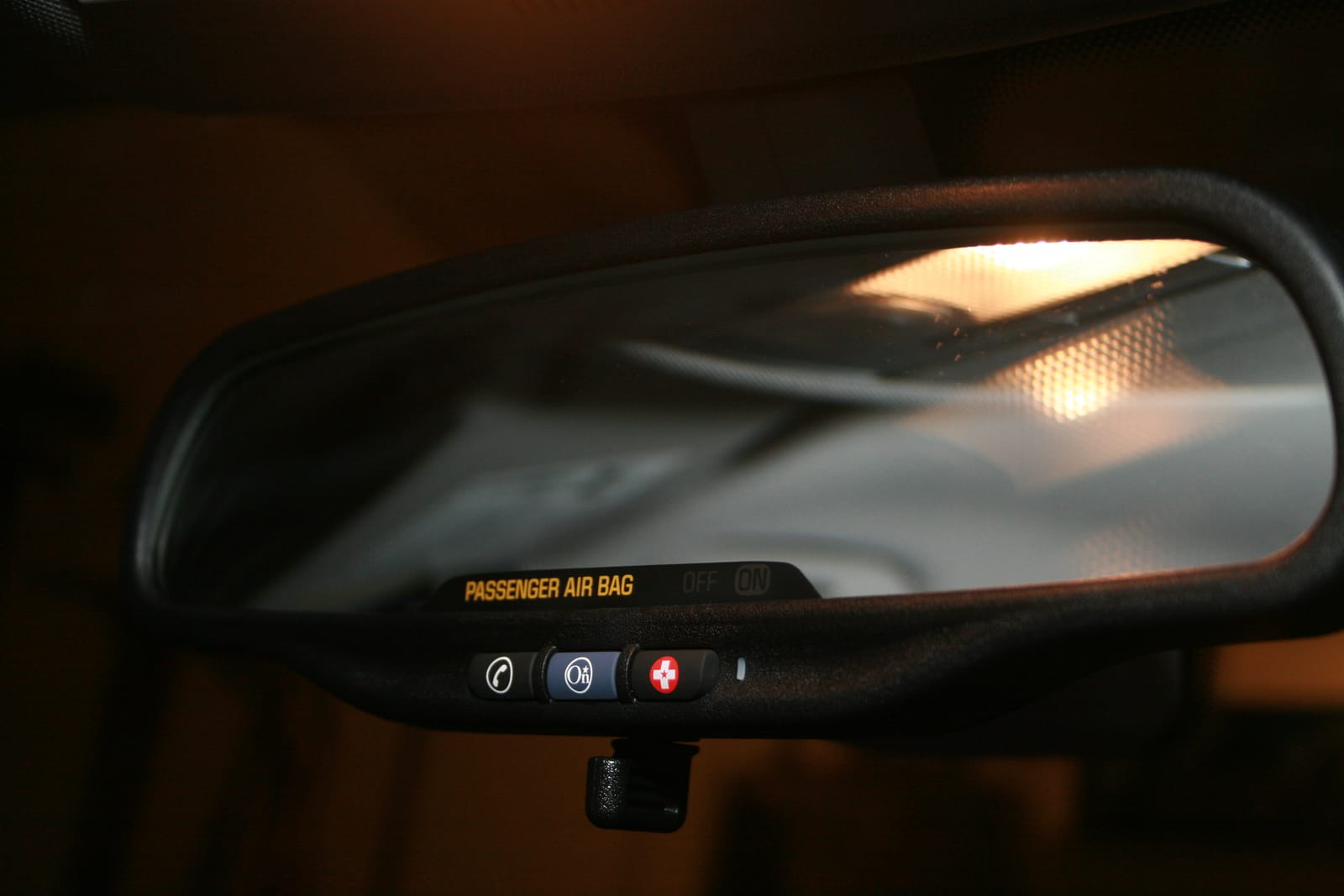
GM owners. GM's privacy statement says you can unenroll from OnStar by calling 1-888-466-7827 or pressing the blue OnStar button. GM says some model year 2019 and later vehicles also let you turn off OnStar location services in the infotainment system's privacy settings.
Other cars. Open the privacy or connected services settings in the car and in the maker's app. For a quick look at what a model collects, Vehicle Privacy Report is a free VIN lookup run by Privacy4Cars, a private company.
Your insurance rate. If an insurer raises your rate or turns you down based even partly on a consumer report, it must give you a notice, though not necessarily in writing. The FTC's guidance for insurers says the notice has to name the company that supplied the report and tell you that you can get a free copy from that company if you ask within 60 days.
A wrong file. "You have the right to dispute incomplete or inaccurate information," the CFPB's summary of your rights says, and the company must investigate unless the dispute is frivolous.
Driving data is one kind of broker file. For people-search sites and other brokers, see how to remove your personal information, free steps first.
Asking works. A Michigan driver told InvestigateTV in 2024 what happened when he asked for his file: "I was able to call LexisNexis, put in a request for my file, and what came back was 200 pages." The report listed his trips, with hard braking and high-speed events.
Frequently asked questions
Do I get money from the GM settlement?
No. The $220 million goes to 35 states and the District of Columbia. Michigan's attorney general said the settlement does not provide for consumer restitution, and that a nationwide class action seeking money is still pending.
How do I know if my car was in Smart Driver?
Ask. Request your file from LexisNexis and Verisk, and send GM a privacy access request. Do not rely on the OnStar app, which told more than 370,000 enrolled drivers they were not enrolled.
Is my driving data still being sold?
GM says its sharing with LexisNexis and Verisk ended on March 20, 2024, and the FTC order bars GM from giving location and driving behavior data to consumer reporting agencies for five years. Verisk says it no longer receives driving data from automakers.
Can I get my driving data deleted?
GM offers deletion through its privacy request form. Under the Washington judgment and the similar ones in other states, GM must also ask the companies it shared driving data with before January 16, 2025 to delete it. If your file at a consumer reporting company is wrong, you can dispute it.
Is this only about GM?
No. Verisk's disclosure page also lists Honda and Hyundai. When LexisNexis launched its Telematics OnDemand product in 2020, it said its Telematics Exchange already included General Motors, Mitsubishi and Nissan.