
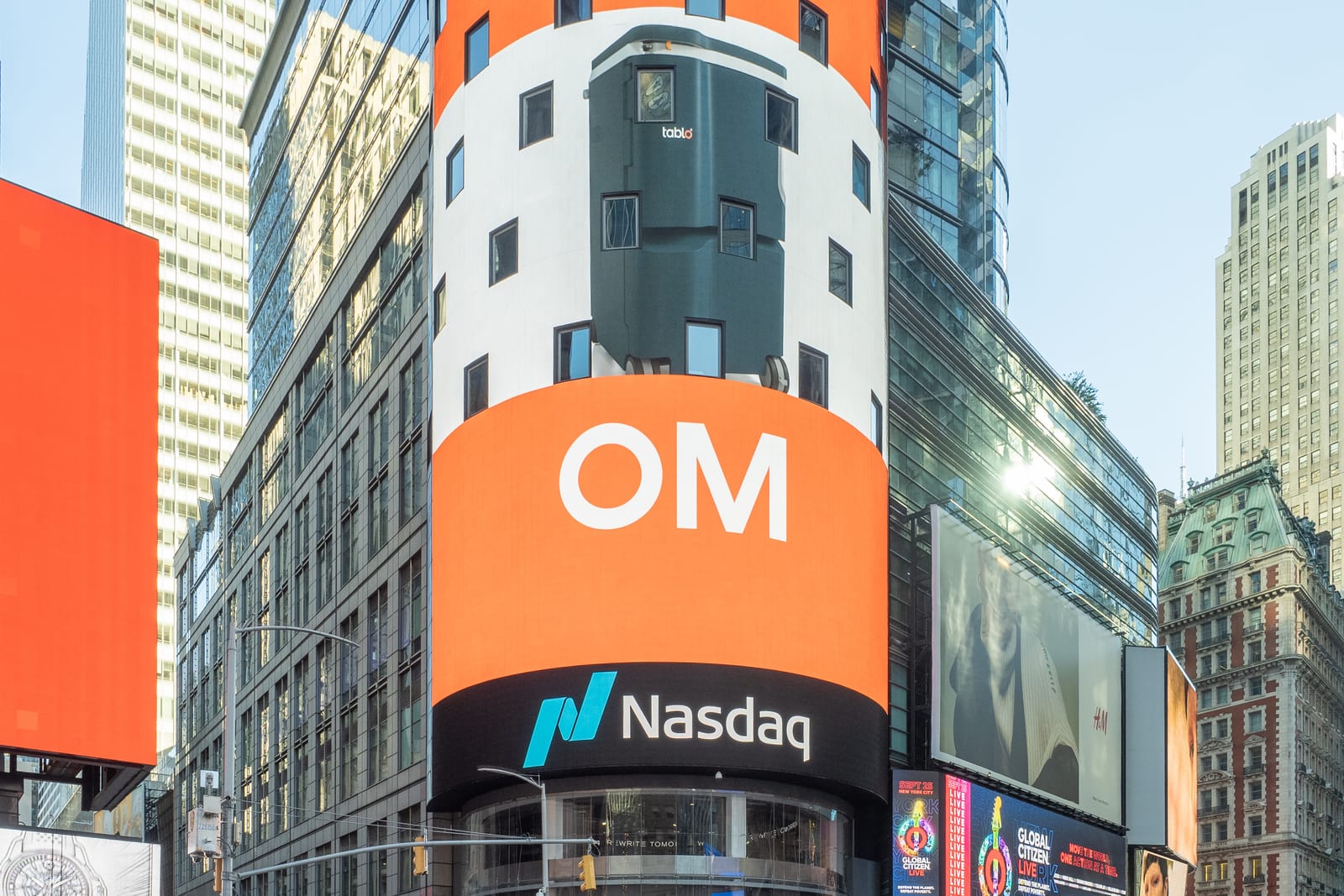
Anthropic, the company that makes the Claude chatbot, began trading on the Nasdaq Global Select Market on November 19, 2026, under the symbol ANT (Anthropic). Its final prospectus set the price at $83 a share, and the base offering of 980 million shares came to $81.34 billion (SEC filing). The stock closed its first day at $97.17, CNBC reported.
The short answer
The IPO filings do not announce any change to Claude's privacy settings or chat retention. Anthropic's registration statement, the S-1, says the company processes personal information, has faced risks of phishing and other cyberattacks "including by nation-states and state-sponsored actors," and that in certain jurisdictions, staff or vendors "may be legally compelled to cooperate with government authorities." It says that in October 2026 the Federal Trade Commission sent it a civil investigative demand about its consumer protection, data protection and privacy practices, and that its usage policy bans mass surveillance. The S-1 does not describe how it handles consumer chats. Those rules are on Anthropic's help pages, covered in our guide Is ChatGPT private?
Facts are current as of November 20, 2026.
What the filing says about personal data
The S-1's risk section on privacy and cybersecurity says: "We store, handle, and otherwise process confidential, proprietary, and personal information, and our customers use our models, platform, and applications to process similarly sensitive information" (S-1, Risks Related to Privacy, Cybersecurity, and Intellectual Property).
It says security risks, cyberattacks and other attempts to get into its systems "have resulted in, and may in the future result in, breaches of our security measures," including "unauthorized access to, and misappropriation of, personal, confidential, or proprietary information belonging to us, our customers, or others."
It also names two sources of risk:
- Nation-states. "We have in the past faced and in the future may face risks of phishing schemes and other cyberattacks, including by nation-states and state-sponsored actors."
- Government access through people. In certain jurisdictions, staff, vendors or operators "may be legally compelled to cooperate with government authorities, including intelligence and security agencies, in ways contrary to our interests, such as by providing access to our systems, data, or model weights."
In a separate risk factor, the S-1 says that during third-party cybersecurity tests, a setup error left models connected to the open internet, and in one incident "an early version of a model used a password it found to gain administrator access to a third party's system, harvested additional credentials, changed system settings, and read one individual's personal information" (S-1, Risks Related to our Business and Industry).
The FTC inquiry
"In October 2026, the FTC issued a civil investigative demand to us seeking information about our consumer protection, data protection, and privacy practices, as well as the safety and security of our products," the S-1 says. A civil investigative demand is a legally enforceable demand, like a subpoena, for documents, testimony or answers to questions (FTC). The FTC calls it "the first step in an investigation," not a lawsuit (FTC).
Mass surveillance and the Pentagon dispute
The S-1 says Anthropic's "usage policy prohibits the use of our models, platform, and applications to develop or operate fully autonomous weapons or to conduct mass surveillance, including mass domestic surveillance," and that it has turned down such uses "notwithstanding the revenue those or similar uses could generate."
That position led to a dispute with the federal government. On February 27, 2026, Anthropic said months of talks had reached "an impasse over two exceptions we requested to the lawful use of our AI model, Claude: the mass domestic surveillance of Americans and fully autonomous weapons" (Anthropic). In March, the Pentagon said Anthropic and its products were "deemed a supply chain risk, effective immediately," the Associated Press reported, via NPR.
The S-1 says the lawsuits are still open. On August 27, 2026, a federal district court ruled largely in Anthropic's favor on one designation, under Section 3252. On September 25, 2026, a split D.C. Circuit panel ruled 2-1 that a second designation, under Section 4713, "was proper," and Anthropic has asked the full court to rehear the case. The filing also says the Department of War "suggested it could invoke the Defense Production Act to compel us to remove the limitations we have placed on the use of our models for autonomous weapons and mass surveillance."
The phrase "high-tech surveillance states" comes from the founders' letter that Anthropic filed with the SEC on November 10: "Authoritarian governments may use AI to create high-tech surveillance states, deepen repression, and make themselves much more difficult to dislodge" (SEC filing).
What the filing does not cover
We found no passage in the S-1 on whether Claude trains on consumer chats, how long consumer chats are kept, or how the company answers law enforcement requests for user data. Anthropic's help pages cover the first two:
- Anthropic's privacy policy says it may use your chats to train its models "unless you opt out through your account settings" (Anthropic). The switch is in Settings, Privacy, under "Help Improve our AI models" (Anthropic).
- Incognito chats "are not used for training" (Anthropic).
- Deleted chats leave Anthropic's back-end storage within 30 days. Chats used for training may be kept in de-identified form for up to 5 years, and chats flagged for usage policy violations for up to 2 years (Anthropic).
Step-by-step settings for Claude, ChatGPT, Gemini, Meta AI and Copilot are in our guide Is ChatGPT private?
This article was researched with AI tools, including Anthropic's Claude.