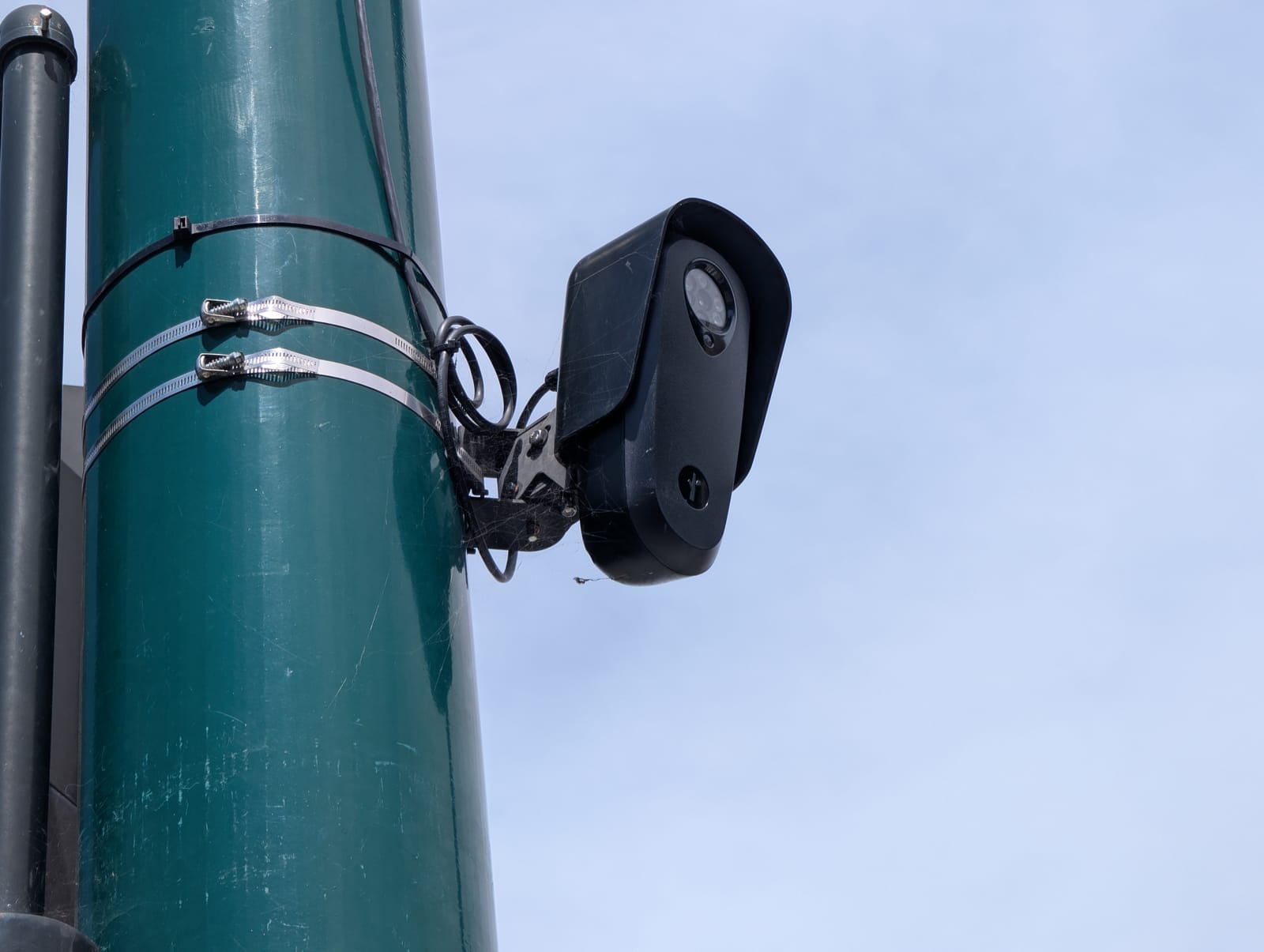

An Ohio House bill would keep records from license plate reader cameras, such as those made by Flock Safety, out of reach of public records requests, the Columbus Dispatch reported on November 16 (also on Yahoo News). The same bill would make misuse of the cameras' data a fifth-degree felony. Testimony filed for a November 17 hearing says the records change covers law enforcement searches of the data.
The bill is House Bill 725, sponsored by Rep. Kevin D. Miller, a Newark Republican. At a November 10 hearing, Miller said the public records change was because the data can "compromise active investigations," the Dispatch reported. He said the penalties would be similar to those for misusing other types of law enforcement databases.
The House Public Safety Committee held its fourth hearing on the bill on November 17. The committee's testimony list for that hearing names 11 proponents, 11 opponents and 3 interested parties. Most of the written testimony addresses the substitute version, "Substitute House Bill 725." The bill has not had a committee vote, according to its committee page.
Facts are current as of the afternoon of November 17, 2026.
How the bill changed
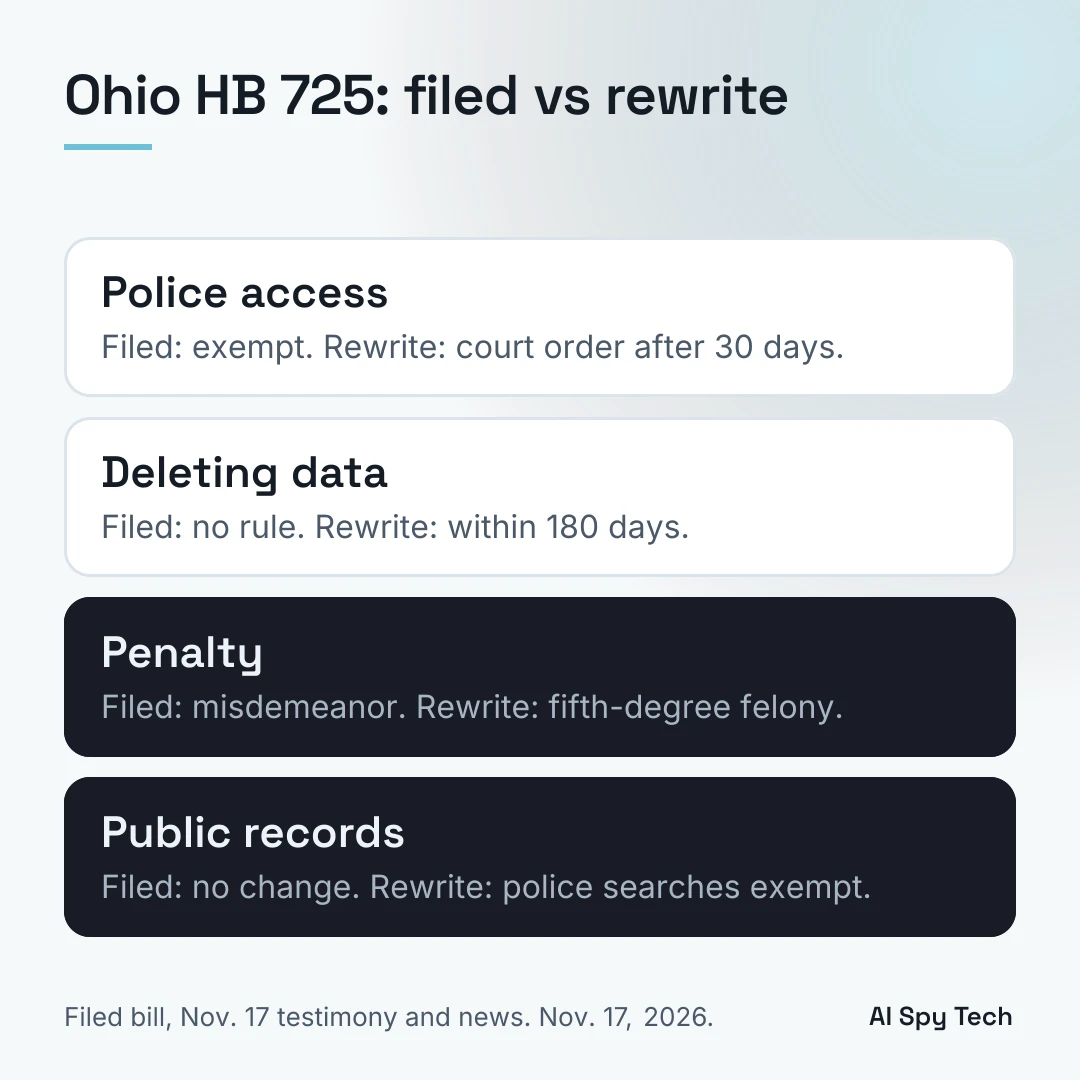
HB 725 had its first hearing on March 11, 2026. The version on the legislature's website is the bill as introduced. It is two pages long. The notice for the November 10 hearing listed a "Poss. Sub. Bill," a possible substitute version. A proposed substitute version "was posted for the Ohio House Public Safety Committee's third hearing," the Advertiser-Tribune reported on November 11. "Official records did not immediately confirm whether lawmakers adopted the revised proposal," the paper reported. Local 12 (WKRC) reported that the change would also keep plate reader records out of public records requests. As of November 17, the bill's page lists only the bill as introduced. Written testimony for the November 17 hearing describes the substitute version. The table uses that testimony where it covers a point.
| The bill as introduced | The substitute version, as described in November 17 testimony and news reports | |
|---|---|---|
| Main rule | No person may "for commercial purposes ... knowingly collect, use, sell, transfer, or share" plate data | Bars collecting, using, selling, transferring or sharing plate data for commercial purposes, with exemptions for normal business activity such as insurance, access control, toll collection and theft prevention, for security on a person's own property, and for sharing under a warrant or court order (Ohio Business Roundtable and Ohio Chamber of Commerce testimony) |
| Police use | Exempt: police use "in the course of the agency or officer's law enforcement activities" | Data under 30 days old: for an active criminal investigation or a qualifying emergency. 30 to 180 days old: a court order is also required (Ohio Association of Chiefs of Police testimony). A petitioner is "not required to establish probable cause or identify a suspect in order to obtain a court order" (bill text quoted in ACLU of Ohio testimony) |
| Deleting data | None | Deleted within 180 days unless tied to an active criminal investigation, a qualifying emergency, a legal proceeding or a legal hold (Ohio Mayors Alliance testimony) |
| Penalty | Misdemeanor of the first degree: up to 180 days in jail and a $1,000 fine (Advertiser-Tribune) | Fifth-degree felony (Ohio Prosecuting Attorneys Association testimony): generally six to 12 months in prison and a fine of up to $2,500 (Advertiser-Tribune) |
| Public records | No change | Exempts law enforcement searches of plate reader data from public records requests (ACLU of Ohio testimony) |
| Policy and audits | None | Agencies adopt a policy on ethical use, with standards and practices for internal audits (Ohio Association of Chiefs of Police testimony) |
The bill as introduced also exempts "normal business activity, including for insurance purposes or for regulating access to private property," and sharing between public entities.
At the first hearing on March 11, Miller's sponsor testimony described the bill as closing "a loophole in Ohio law where private entities or third parties can collect and monetize license plate scan data for commercial purposes." His written testimony also says: "this bill does not interfere with legitimate law enforcement use of ALPR systems."
What the Dispatch and the ACLU of Ohio reported about the records change
Public records of officer searches have surfaced evidence of potential misuse of Flock cameras, the Dispatch reported. A Dispatch analysis of Flock records showed Columbus police leadership used the database to monitor the actions of U.S. Immigration and Customs Enforcement during "Operation Buckeye" in December 2025, the paper reported. Columbus Mayor Andrew Ginther paused the city's use of Flock cameras after the Dispatch asked questions about data analyzed by USA Today Network journalists, the paper reported.
Gary Daniels, legislative director of the ACLU of Ohio, told the Dispatch he has not seen anything in publicly disclosed audit logs that would compromise an active investigation. "This seems to be the latest attempt to shut off avenues of government transparency and accountability," he said.
Daniels also said the bill's text says a court "shall" order extensions on the use of license plate data for investigations or criminal proceedings, and applicants don't need to show probable cause. That removes judicial discretion, Daniels said, according to the Dispatch.
Miller did not respond to the Dispatch's request for comment.
Who testified on November 17
Groups that filed testimony in support include the Ohio Fraternal Order of Police, the Ohio Association of Chiefs of Police, the Ohio Prosecuting Attorneys Association, the Buckeye State Sheriff's Association, the Ohio Mayors Alliance, the Ohio Chamber of Commerce and Flock Safety, according to the committee's testimony list.
Flock Safety's written testimony says the company "supports and applauds HB 725." It says the data from a customer's cameras "belongs to and is controlled by that customer, not Flock," that the customer sets the retention period, and that "Flock does not sell customer data to third parties."
Gary Daniels of the ACLU of Ohio testified against the substitute version. His testimony says the ACLU of Ohio opposes the change to public records law, which "exempts search inquiries used by law enforcement when accessing ALPR data anywhere in Ohio." It says the group's position on government use of the cameras is "we want them banned." It names New Hampshire's law, which requires the data to be deleted within three minutes unless it falls into specific categories, as the approach the group prefers.
The Ohio Association of Repossessors testified against the bill's limits on commercial use. Its testimony addresses the bill as introduced.
What Ohio law says now
Ohio already keeps some plate reader data out of public records. The state's Public Records Act, Ohio Revised Code 149.43, excludes "images and data captured by an automated license plate recognition system that are maintained in a law enforcement database." That exemption took effect on September 30, 2025, cleveland.com reported. The exemption does not cover every record about the cameras, such as policies or contracts, cleveland.com reported.
A cleveland.com review of the Ohio Revised Code and Ohio Administrative Code found no statewide provision specific to plate readers that sets how long police may keep the data, what officers must establish before searching it, who may receive it, or how its use must be audited. Flock Safety announced in August that its default retention period was being cut from 30 days to seven, the Dispatch reported.
Other Ohio plate reader bills
Four more bills on the cameras were introduced in September, according to the ACLU of Ohio:
- Senate Bill 469 (Sen. Cutrona, R): deletion after 10 days unless the data is part of an investigation, a warrant for sharing, monthly internal audits, and a ban on the cameras within 500 feet of a house of worship or a firearms retailer.
- House Bill 1010 (Rep. Dean, R): a general ban with exceptions, a warrant requirement, and deletion within 90 days. It has cosponsors from both parties.
- House Bill 1011 (Rep. Click, R): a one-year moratorium with exceptions.
- House Bill 1009 (Reps. Newman and Willis, R): extends the existing fifth-degree felony for misusing law enforcement databases to plate reader and other surveillance databases.
The ACLU of Ohio wrote on November 6 that "it is not expected any of the bills will pass during this current legislative session, ending in December." Ironton passed a local ban on the cameras in August, the Ironton Tribune reported.
What an Ohio resident can do
- Ask your city or county for its plate camera policy and contract. The public records exemption covers camera images and data kept in a law enforcement database. It does not cover every record about the cameras, such as policies or contracts, cleveland.com reported. Our Flock camera guide explains how to find out whether your town uses the cameras and how to word a records request.
- Know what the records change would reach. Logs of officers' Flock searches have been released as public records under current law, the Dispatch reported, and its reporting on Columbus police used them. The substitute version would exempt law enforcement searches of plate reader data from public records, according to ACLU of Ohio testimony.
- Find your state representative. The Ohio House has a district map and a member directory. HB 725 is in the House Public Safety Committee, chaired by Rep. Cindy Abrams.
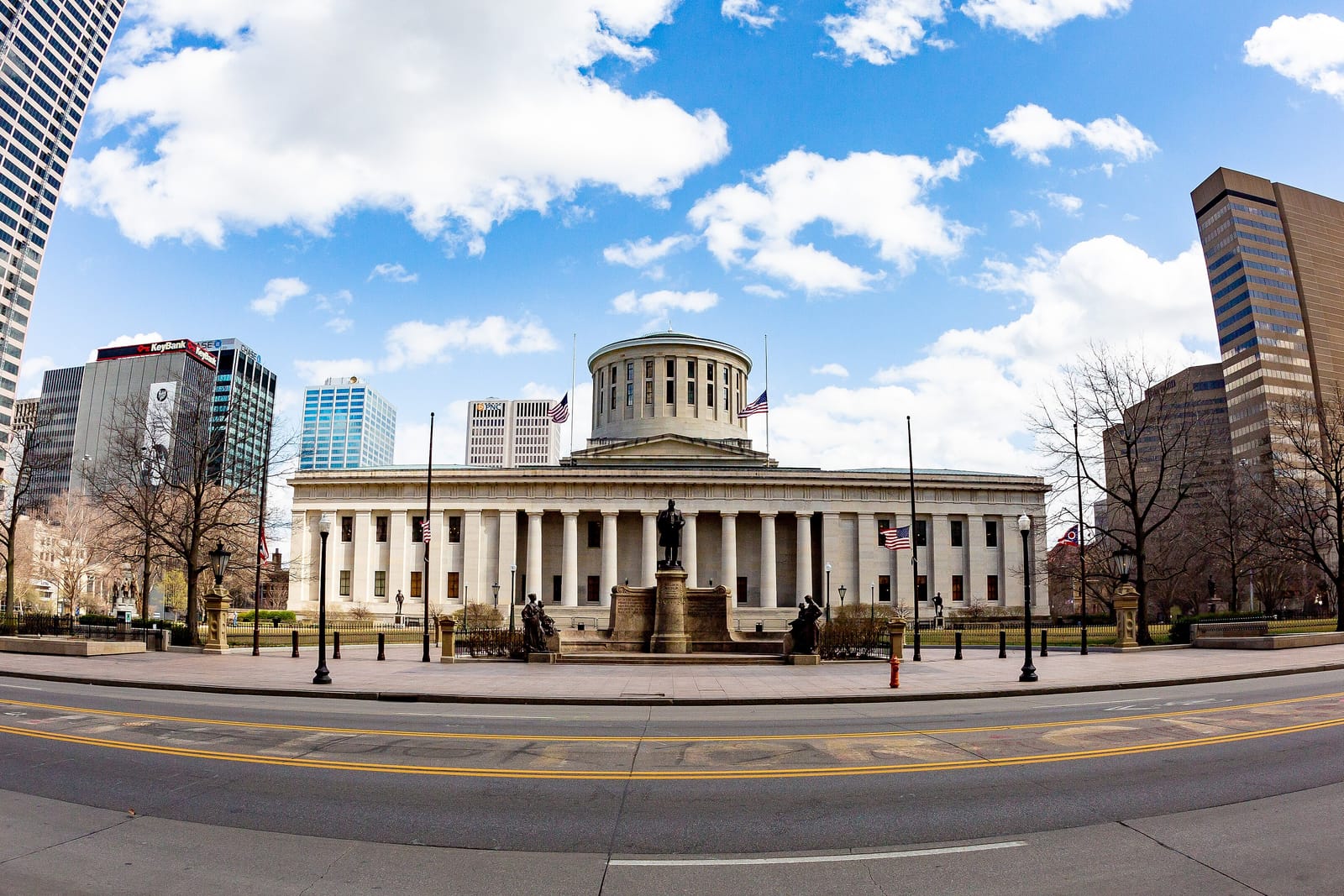
- Send testimony or attend. The committee's meeting notices say testimony goes in through the Ohio House website no later than 24 hours before the meeting. The committee meets in Room 114 of the Ohio Statehouse, 1 Capitol Square, Columbus. As of the afternoon of November 17, no later hearing on HB 725 is posted.
- Track the bill. The legislature's HB 725 page has a "Track It" button and lists the current version of the bill, now "As Introduced."
Frequently asked questions
Is HB 725 law?
No. It is in the House Public Safety Committee, which held its fourth hearing on November 17. The bill has not had a committee vote, according to its committee page. To become law it would also need to be reported by the committee, pass the House and the Senate, and be sent to the governor, according to the steps on the bill's legislature page.
Can I get plate camera records in Ohio now?
Not the camera images and data kept in a law enforcement database. Ohio Revised Code 149.43 has exempted those since September 30, 2025, cleveland.com reported. The exemption does not cover every record about the cameras, such as policies or contracts. Logs of officers' searches of the data have been released as public records, the Dispatch reported. The substitute version of HB 725 would exempt those searches, according to ACLU of Ohio testimony. The legislature's bill page lists only the bill as introduced.
What is a fifth-degree felony in Ohio?
The lowest felony level in Ohio. If a court imposes prison, the term is six to twelve months under Ohio Revised Code 2929.14. The ACLU of Ohio says it is the penalty now for unauthorized use of similar law enforcement databases. HB 1009 and the proposed substitute version of HB 725 would both apply it to misuse of plate reader data.
How long do Ohio police keep plate camera data?
Ohio has no statewide law on it, the ACLU of Ohio and a cleveland.com review say. Individual agency policies may set limits, cleveland.com reported. Cleveland's police policy generally limits stored data to 30 days, with exceptions for evidence. Flock Safety announced in August that its default retention period was being cut from 30 days to seven, the Dispatch reported.